Introduction
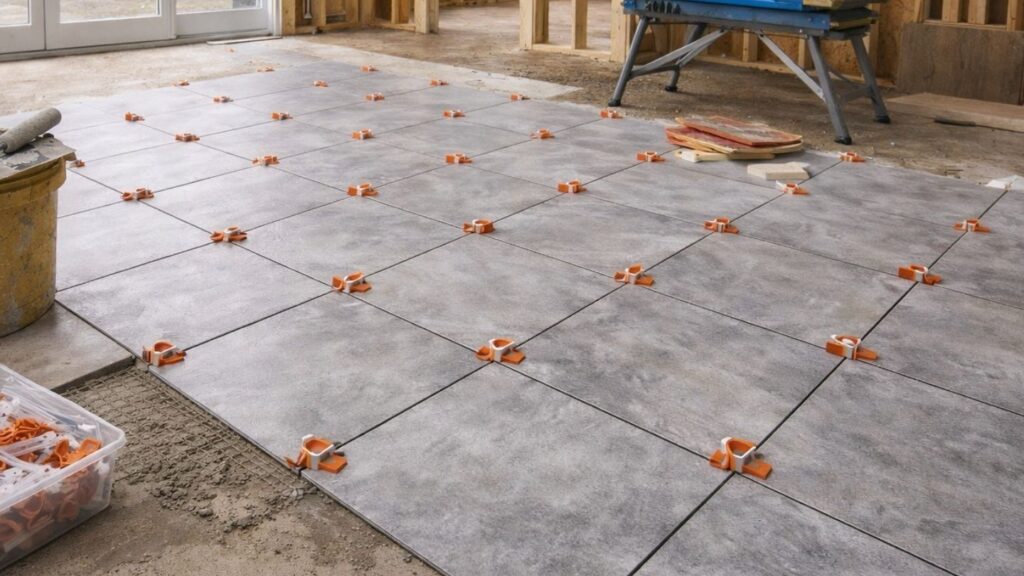
Professional Tile Installation depends on careful preparation, accurate layout, consistent alignment, compatible materials, clean transitions, and following the requirements of the selected tile and installation system.
Appearance and durability are closely connected to what happens beneath, between, and around the visible tile.
Homeowners often focus first on color, size, shape, or pattern.
However, preparation, substrate condition, movement, edges, grout, and transitions can be just as important.
Author: KCB Construction Editorial Team
Updated: November 2026
KCB Construction has 10 years of experience serving clients in the United States through residential and commercial construction and remodeling services.
What Does Professional Tile Installation Actually Mean?
Professional Tile Installation involves more than creating straight-looking rows.
The entire installation should be planned as a connected system.
Important elements may include:
- Substrate preparation
- Layout
- Spacing
- Cuts
- Alignment
- Edges
- Transitions
- Grout
- Surrounding finishes
A tile surface may look attractive from a distance while still having poorly planned edges or transitions.
Therefore, workmanship should be considered throughout the entire room.
The underlying surface also matters.
A strong visual result depends on both the visible tile and the conditions supporting it.
Why Is Surface Preparation So Important Before Tile Installation?
Tile relies on the surface beneath it.
If that surface has significant problems, installing attractive tile over it does not automatically solve them.
The substrate may need to be evaluated for:
- Stability
- Cleanliness
- Flatness
- Existing damage
- Moisture conditions
- System compatibility
Different tile products and installation systems may have different requirements.
Therefore, preparation should be based on the actual project and selected materials.
Existing damage should not simply be hidden beneath new finishes.
Professional evaluation may be needed when the underlying condition is uncertain.
Can Tile Be Installed Over Any Surface?
No.
Not every existing surface is automatically suitable for tile.
Suitability may depend on the condition of the surface, the tile type, installation system, moisture exposure, and manufacturer guidance.
Some existing materials may require repair or preparation.
Others may not be appropriate for the planned installation.
The correct approach should be determined by the specific conditions rather than one universal rule.
Why Does Substrate Flatness Matter?
An uneven surface can affect the appearance of the finished tile.
It may make alignment more difficult and create inconsistent visual relationships between pieces.
Possible effects may include:
- Uneven edges
- Irregular joints
- Difficult transitions
- Distorted patterns
This can become especially noticeable with larger tile formats or strong grout contrast.
However, the appropriate level of preparation depends on the selected system and manufacturer requirements.
Why Is Tile Layout Planned Before Installation Begins?
Layout determines where full tiles, cut tiles, joints, and visual focal points appear.
A good layout considers the entire space before installation begins.
Important areas may include:
- Room dimensions
- Visible walls
- Doors
- Vanities
- Cabinets
- Tubs
- Showers
- Niches
- Transitions
For example, a poorly planned layout may create a very small cut in a highly visible location.
Better planning can often reduce awkward visual relationships where practical.
However, no single layout rule works for every room.
Existing conditions, tile dimensions, fixtures, and design goals can change the best approach.
What Makes Tile Lines Look Clean and Professional?
Clean tile work depends on consistent visual relationships.
That includes how tiles align with one another and how the layout meets nearby surfaces.
Important details may include:
- Grout joints
- Tile edges
- Pattern consistency
- Corners
- Transitions
- Adjacent finishes
The tile itself can also influence the result.
Some products have greater dimensional variation than others.
Therefore, layout planning should reflect the characteristics of the selected material.
Why Do Tile Size and Shape Matter?
Different tile formats create different design and installation considerations.
Common formats may include:
- Large-format tile
- Small tile
- Mosaic
- Rectangular tile
- Square tile
- Patterned tile
Larger tile can create fewer visible joints, while smaller formats may create more detailed patterns.
However, neither option is automatically better.
Room size alone should not determine tile size.
The layout, surface condition, pattern, transitions, and desired appearance should also be considered.
How Does Tile Pattern Affect Installation?
Tile pattern can significantly change how a surface looks.
Different patterns may also require different planning around cuts, corners, and transitions.
Examples include:
- Straight layouts
- Offset patterns
- Stacked layouts
- Diagonal patterns
- Herringbone where appropriate
A more complex pattern may create additional visual relationships around walls and openings.
Therefore, the pattern should be planned before Tile Installation begins.
The selected tile may also have manufacturer recommendations that affect pattern choices.
Why Are Tile Cuts So Important?
Tile cuts often appear at the edges of the installation.
That makes them an important part of the finished appearance.
Cuts may be visible near:
- Walls
- Corners
- Doors
- Cabinets
- Fixtures
- Niches
- Transitions
Well-planned cuts can help the layout feel intentional.
However, existing walls and fixtures may not always be perfectly symmetrical.
As a result, adjustments may be necessary.
The goal is thoughtful coordination rather than assuming every cut can be identical.
How Should Tile Work Around Doors and Openings?
Doors and openings create important transition points.
Tile may need to coordinate with door jambs, trim, thresholds, floor levels, and adjacent rooms.
Important relationships include:
- Door jambs
- Thresholds
- Trim
- Floor height
- Adjacent flooring
- Wall openings
Poor coordination can make the transition between tile and Finish Carpentry look unfinished.
KCB Construction provides Finish Carpentry along with Tile Installation and other interior remodeling services.
Planning these details together can create cleaner transitions.
Why Do Floor Transitions Matter?
Tile often meets another flooring material.
That transition can be highly visible and can influence how connected two rooms feel.
Tile may meet:
- Hardwood
- Laminate
- Carpet
- Other tile
- Thresholds
- Adjacent rooms
Height differences should be considered before installation.
The relationship between flooring materials may affect doors, trim, thresholds, and overall appearance.
Therefore, transitions should not be left as an afterthought.
How Does Tile Installation Affect Bathroom Remodeling?
Bathrooms often contain several types of tile and many fixed elements within a small space.
That makes coordination especially important.
Bathroom Tile Installation may involve:
- Floor tile
- Wall tile
- Shower tile
- Vanity
- Plumbing fixtures
- Trim
- Moisture-management systems
- Ventilation
KCB Construction provides Bathroom Remodeling and Tile Installation as part of its remodeling services.
Tile should coordinate with the vanity, fixtures, doors, lighting, and surrounding finishes.
However, visible tile should not be treated as the complete waterproofing system in a wet area.
Is Tile Waterproof?
Tile should not automatically be considered a complete waterproofing system.
Some tile surfaces have strong water resistance, but the complete assembly matters.
Grout joints, penetrations, edges, and underlying systems can all influence moisture management.
Wet areas may require dedicated systems beneath or behind the visible tile.
The correct system depends on the products and project conditions.
Manufacturer and installation-system requirements should be followed.
Why Is Waterproofing Important in Wet Areas?
Showers and other wet areas regularly experience water exposure.
Therefore, moisture management should be considered before the visible tile is installed.
Appropriate systems may exist behind or beneath tile depending on the project.
Tile alone should not be expected to perform the entire moisture-management role.
The selected system should be compatible with the tile and installation materials.
Qualified installers and manufacturers can provide project-specific guidance.
How Does Tile Installation Affect Kitchen Remodeling?
Tile is often used in kitchens for backsplashes, floors, and selected wall areas.
Each use creates different relationships with other finishes.
Tile may need to coordinate with:
- Cabinets
- Countertops
- Outlets
- Appliances
- Lighting
- Flooring transitions
A backsplash, for example, may need to end near cabinets, windows, or open wall areas.
That makes edge planning important.
KCB Construction provides Kitchen Remodeling and Tile Installation for residential projects.
How Should Tile Coordinate With Cabinets and Countertops?
Tile is often installed next to fixed materials that already have strong colors, patterns, or textures.
Those materials should be considered together.
Important relationships may include:
- Cabinet color
- Countertop pattern
- Hardware
- Backsplash
- Flooring
- Lighting
A heavily patterned countertop may interact differently with decorative tile than a simple solid surface.
There is no universal color formula.
The goal should be a coordinated result that supports the homeowner’s design preferences.
Why Does Grout Matter So Much?
Grout is a visible part of most tile installations.
Its color and contrast can change how strongly the tile pattern appears.
Important considerations may include:
- Color
- Contrast
- Consistency
- Maintenance
- Product compatibility
A grout color close to the tile may create a softer look.
A stronger contrast can make each tile and joint more noticeable.
However, grout should not be treated as the waterproofing system.
Product selection should also follow manufacturer compatibility requirements.
Should Grout Match the Tile?
Not necessarily.
Grout can match, subtly contrast, or strongly contrast with the tile.
Each approach creates a different visual effect.
Possible choices include:
- Close matching
- Subtle contrast
- Strong contrast
Stronger contrast can make tile alignment and pattern more visible.
Therefore, homeowners should consider how much they want the joints to stand out.
The choice should support the tile and overall room design rather than follow one universal rule.
How Do Corners and Edges Affect the Final Look?
Corners and exposed edges are often among the most noticeable details in Tile Installation.
They may appear around niches, walls, backsplashes, and other transitions.
Possible solutions may involve:
- Edge profiles
- Trim systems
- Finished tile edges
- Corners
- Niches
- Transitions
The appropriate detail depends on the tile and design.
Some products offer finished edges, while others may use compatible trim systems.
These choices should be made before the final installation reaches the edge.
Why Are Movement and Expansion Important?
Buildings and materials can move slightly over time.
Temperature, moisture, and normal building behavior can contribute to this movement.
Tile systems need to account for applicable movement requirements.
However, technical spacing and joint specifications depend on the installation system and project.
Homeowners should rely on applicable industry guidance, manufacturer requirements, and qualified installers.
Movement planning is part of the complete installation rather than a decorative detail.
How Does Tile Work With Underfloor Conditions?
Floor Tile Installation depends on the condition of the surface beneath it.
Existing conditions may affect how the finished floor performs or transitions to other rooms.
Considerations may include:
- Substrate condition
- Floor transitions
- Previous flooring
- Movement
- Moisture concerns
Existing floors should not be assumed to be ready for tile without evaluation.
Likewise, suspected structural problems should be reviewed by qualified professionals rather than covered with new flooring.
Can Existing Tile Always Be Tiled Over?
No.
In some situations, installation over existing tile may be possible.
However, it is not appropriate in every project.
Suitability may depend on:
- Existing bond
- Surface condition
- Flatness
- Added height
- Moisture conditions
- Installation system
- Manufacturer requirements
Therefore, homeowners should not assume that leaving existing tile in place is automatically the easier or correct option.
The existing installation should be evaluated first.
When Should You Talk to a Tile Contractor?
Professional input can be especially useful when Tile Installation involves wet areas, complicated layouts, large-format products, multiple transitions, or uncertain existing surfaces.
Other situations may include:
- Niches
- Stairs
- Several tile types
- Remodeling coordination
- Uneven existing surfaces
- Detailed edge conditions
A contractor can help identify how tile interacts with surrounding materials and other trades.
KCB Construction provides Tile Installation and related remodeling services in Woburn, MA, Middlesex County, and the Greater Boston Area.
Existing homes may also contain older flooring, previous renovations, or transitions that require additional planning before new tile is installed.
With the layout, substrate, edges, grout, wet-area needs, and transitions understood, homeowners can more clearly evaluate installation quality, common mistakes, room-specific planning, maintenance, workmanship, and contractor responsibilities.
What Does Quality Tile Installation Look Like?
Quality Tile Installation usually looks deliberate rather than improvised.
The layout, cuts, grout joints, corners, and transitions should work together as one finished surface.
Visible qualities may include:
- Consistent alignment
- Planned layout
- Clean cuts
- Coordinated grout joints
- Neat corners
- Clean transitions
- Finished edges
- Coordination with nearby finishes
However, existing walls and floors may not be perfectly straight.
Tile manufacturing can also include normal variation.
Therefore, quality should be judged by thoughtful planning and overall workmanship rather than expecting unrealistic perfection on every existing surface.
What Are the Most Common Tile Installation Mistakes?
Many visible problems begin before the first tile is installed.
Common mistakes may include:
- Poor substrate preparation
- Starting without a layout plan
- Awkward small cuts
- Inconsistent alignment
- Poorly planned transitions
- Ignoring material movement
- Poor wet-area planning
- Covering damaged surfaces
- Choosing grout without considering the tile
- Ignoring manufacturer instructions
- Poor edge planning
- Failing to coordinate with other trades
These issues may affect appearance, transitions, or long-term performance.
For example, poor edge planning can make an otherwise attractive backsplash look unfinished.
Likewise, ignoring underlying surface problems may create complications after the visible work is completed.
Why Should Tile Be Planned Around the Whole Room?
Tile Installation should relate to the entire space.
It should not be planned as an isolated surface.
The layout may need to coordinate with:
- Walls
- Cabinets
- Vanities
- Doors
- Windows
- Plumbing fixtures
- Countertops
- Flooring
- Trim
For example, a backsplash may meet a cabinet, window, countertop, outlet, and painted wall in the same area.
Each transition affects the final appearance.
Therefore, coordination creates a more intentional result.
How Should Tile Be Planned in a Shower?
Shower tile requires careful planning because several details meet within a wet area.
These may include:
- Tile layout
- Niches
- Plumbing fixtures
- Corners
- Edges
- Transitions
- Waterproofing systems
- Drainage considerations
Tile alone is not the waterproofing system.
Wet areas may require appropriate systems beneath or behind the visible surface.
Slope, drainage, waterproofing, and product compatibility should be handled according to the selected system and qualified professional guidance.
How Should Bathroom Floor Tile Be Planned?
Bathroom floor tile should coordinate with the entire room layout.
Important relationships may include:
- Room dimensions
- Vanity
- Toilet
- Shower or tub
- Doorway
- Transitions
- Tile format
- Grout
- Floor condition
A tile pattern may look different once a vanity or other fixture covers part of the floor.
Therefore, the full room should be considered before finalizing the layout.
KCB Construction provides Bathroom Remodeling and Tile Installation as part of its interior remodeling services.
How Should Kitchen Backsplash Tile Be Planned?
A backsplash has several visible stopping points.
That makes edge planning especially important.
The layout may need to consider:
- Countertops
- Cabinet layout
- Outlets
- Switches
- Range area
- Windows
- Open wall edges
- Tile termination points
For example, tile may end beside a cabinet or continue to another architectural feature.
The chosen approach should look intentional.
Tile size and pattern can also affect how cuts appear around outlets, corners, and windows.
How Should Kitchen Floor Tile Be Planned?
Kitchen floor tile should coordinate with both the room layout and nearby flooring.
Important factors may include:
- Cabinets
- Appliances
- Traffic areas
- Transitions
- Adjacent rooms
- Floor condition
- Cleaning needs
The tile should also relate visually to cabinets, countertops, and other finishes.
KCB Construction provides Kitchen Remodeling and Tile Installation, allowing these elements to be considered together.
Can Tile Work Well in a Basement?
Yes, depending on the conditions and project goals.
Tile may be appropriate for some basement spaces, but the existing environment should be evaluated first.
Considerations may include:
- Moisture concerns
- Substrate condition
- Temperature conditions
- Flooring transitions
- Room use
Tile does not solve an active moisture problem.
Existing moisture concerns should be addressed before new finishes are installed.
KCB Construction provides Basement Finishing and Tile Installation for remodeling projects.
How Does Tile Work With Interior Painting?
Tile and wall color should support one another.
Their relationship can influence how the entire room feels.
Consider:
- Grout color
- Tile undertones
- Nearby walls
- Trim
- Cabinets
- Lighting
For example, a strongly patterned tile may look different beside a high-contrast wall than beside a quieter paint color.
KCB Construction provides Painting services that can be coordinated with tile and other interior finishes.
How Does Tile Work With Finish Carpentry?
Tile often meets carpentry details at doors, walls, and built-ins.
These transitions deserve early planning.
Tile may meet:
- Baseboards
- Door casing
- Thresholds
- Built-ins
- Trim
The height and position of the finished tile can influence how these details connect.
KCB Construction provides Finish Carpentry as well as Tile Installation.
Coordinating both stages can help create cleaner transitions.
Does Large-Format Tile Require More Planning?
Yes.
Larger tile may make substrate irregularities, alignment issues, and layout choices more noticeable.
Fewer grout joints can create a clean look, but that does not eliminate the need for preparation.
The substrate and installation system should meet the requirements of the selected product.
Manufacturer guidance should also be followed.
There is no single large-format installation approach that applies to every project.
Are Small Tiles Easier to Install?
Not necessarily.
Small tile and mosaics create different planning challenges.
These may involve:
- Sheets
- Multiple joints
- Patterns
- Corners
- Transitions
A mosaic may adapt visually to some shapes, but joint consistency can become highly noticeable.
Therefore, smaller tile is not automatically easier or harder.
The difficulty depends on the material, layout, surface, and project design.
Why Does Tile Material Matter?
Tile products can vary significantly.
Common categories may include:
- Porcelain
- Ceramic
- Natural stone
- Glass tile
- Mosaics
Each material may have different installation, maintenance, and manufacturer requirements.
For example, natural stone may require considerations that differ from ceramic tile.
The selected product should guide the installation approach rather than relying on assumptions.
How Should Homeowners Think About Tile Maintenance?
Maintenance depends on the tile, grout, finish, exposure, and manufacturer recommendations.
Possible considerations may include:
- Routine cleaning
- Grout care
- Sealers where applicable
- Avoiding incompatible products
- Monitoring damaged areas
There is no universal maintenance schedule for every Tile Installation.
Homeowners should follow recommendations appropriate for their specific materials.
Using incompatible cleaning products may also affect some surfaces.
Can Cracked Tile Always Be Repaired Easily?
No.
A tile repair may be simple in some situations and more complicated in others.
Important factors can include:
- Tile availability
- Cause of damage
- Substrate condition
- Surrounding tile
- Grout
- Access
A crack does not automatically identify the underlying cause.
Impact, movement, substrate conditions, or other factors may be involved.
Therefore, repeated or unexplained cracking may require professional evaluation.
Why Is It Important to Keep Extra Tile?
Extra material can be useful for future repairs.
Tile products may be discontinued, redesigned, or produced in different batches over time.
Color and shade can also vary between production runs.
Keeping matching material can make a future repair easier to coordinate visually.
However, there is no single percentage of extra tile that applies to every project.
The appropriate amount depends on the material, layout, and project.
What Should Homeowners Look for Before Hiring a Tile Contractor?
Homeowners should understand how the contractor plans to approach the complete Tile Installation.
Useful questions may include:
- What surface preparation is included?
- How will the layout be planned?
- How are wet areas handled?
- What tile type is being installed?
- What grout is included?
- How will edges be finished?
- How will transitions be handled?
- How will nearby finishes be protected?
- Who provides materials?
- Is cleanup included?
- How are changes communicated?
It is also helpful to understand what is excluded.
For example, substrate repairs or other trade work may not automatically be part of the tile scope.
Clear expectations can reduce confusion during construction.
Why Is Professional Coordination Important for Tile Installation?
Tile Installation often interacts with several other trades and finishes.
These may include:
- Plumbing
- Cabinets
- Countertops
- Drywall
- Waterproofing systems
- Flooring
- Doors
- Trim
- Painting
- Finish Carpentry
A decision in one area can affect another.
For example, cabinet placement can influence backsplash layout.
Likewise, flooring height can affect thresholds and door transitions.
KCB Construction provides Tile Installation and related remodeling services for homeowners and businesses in Woburn, MA, Middlesex County, and the Greater Boston Area.
Coordinated planning helps the visible tile work connect more naturally with the rest of the project.
What Should You Confirm Before Tile Installation Begins?
Before work starts, homeowners should review the main decisions that affect the project.
Confirm:
- Tile selection
- Room layout
- Substrate condition
- Tile pattern
- Grout choice
- Edge details
- Transitions
- Wet-area system where relevant
- Cabinets
- Fixtures
- Doors
- Trim
- Material responsibilities
- Cleanup
- Communication
This is a planning list rather than a technical installation guide.
Specific installation requirements should follow the selected materials, system, manufacturer guidance, and qualified professional recommendations.
Frequently Asked Questions About Tile Installation
What Makes Tile Installation Look Professional?
Professional Tile Installation combines preparation, layout, alignment, clean cuts, consistent joints, finished edges, and coordinated transitions.
The visible work and the underlying preparation both influence the final result.
Does Tile Last Longer When Professionally Installed?
Proper preparation and installation can support long-term performance.
However, lifespan depends on the tile, substrate, installation system, use, maintenance, moisture exposure, and other project conditions.
No exact lifespan applies to every installation.
Is Tile Waterproof?
Tile alone should not be considered a complete waterproofing system.
Wet areas may require appropriate systems beneath or behind the visible tile.
The correct approach depends on the selected products and installation system.
Why Does Tile Crack?
Tile can crack for several possible reasons.
These may include impact, substrate movement, existing conditions, or other factors within the installation.
A visible crack alone does not reveal the exact cause.
Professional evaluation may be appropriate.
Should Grout Match the Tile?
It can, but it does not have to.
Matching grout may create a softer appearance.
Stronger contrast can make the tile pattern and alignment more visible.
The choice should support the desired design.
Can Tile Be Installed Over Old Tile?
Sometimes, but not in every situation.
Suitability may depend on the condition of the existing installation, bond, flatness, added height, moisture conditions, and manufacturer requirements.
The existing surface should be evaluated first.
Should I Hire a Professional for Tile Installation?
Professional Tile Installation can be especially valuable for wet areas, complicated patterns, large-format tile, multiple transitions, uneven existing surfaces, or projects involving several trades.
The appropriate approach depends on the project.
What Makes Tile Installation Look Better and Perform Longer?
Quality Tile Installation begins before the visible tile is installed.
Preparation, layout, alignment, compatible materials, clean transitions, and appropriate wet-area planning all contribute to the finished result.
The substrate and installation system are just as important as tile color or pattern.
Likewise, grout, edges, corners, and transitions influence how professional the finished surface looks.
Careful coordination also helps tile work effectively with cabinets, plumbing fixtures, flooring, trim, Painting, and Finish Carpentry.
Ultimately, good Tile Installation combines visible workmanship with thoughtful preparation beneath the surface.
Contact KCB Construction Today to discuss Tile Installation for bathrooms, kitchens, flooring, backsplashes, showers, custom layouts, transitions, remodeling projects, and interior finishes. We serve Woburn, MA and the Greater Boston Area with thoughtful planning, quality workmanship, personalized service, and professional project execution.