Introduction
Yes. Properly selected and installed siding can strengthen a home’s exterior envelope and help manage exposure to wind, snow, rain, and moisture. However, winter performance also depends on flashing, water-resistive barriers, insulation, wall conditions, installation quality, and maintenance.
For homeowners preparing for colder weather, siding deserves attention because it forms one of the most visible layers of the exterior wall system.
However, new siding should not be viewed as a single solution that makes a house completely winterproof.
Instead, effective winter home protection depends on several building components working together.
Author: KCB Construction Editorial Team
Updated: September 2026
KCB Construction has 10 years of experience serving clients in the United States through residential and commercial construction, remodeling, painting, framing, finishing, and Siding Installation.
The company serves homeowners and businesses in Woburn, Middlesex County, and the Greater Boston Area.
How Does Siding Help Protect a Home During Winter?
Siding acts as exterior cladding.
Its primary role is to cover and protect the wall assembly from direct exposure to outdoor conditions.
During winter, exterior walls may face:
- Wind
- Snow
- Rain
- Freezing temperatures
- Exterior moisture
- Physical wear
- Changing weather conditions
However, siding does not work independently.
Behind the visible cladding, a properly designed wall may include sheathing, a water-resistive barrier, flashing, insulation, an air-control layer, and structural framing.
The U.S. Department of Energy explains that exterior cladding works with a drainage plane behind it to help manage water that gets past the siding.
Therefore, professional Siding Installation should consider the complete exterior wall system.
Can Siding Block Wind and Snow?
Siding provides an exterior layer that reduces direct exposure of underlying wall components.
However, gaps, damaged sections, poorly detailed openings, or incorrect installation can reduce its effectiveness.
Wind-driven precipitation can reach joints, openings, and transitions in exterior assemblies.
For this reason, the wall behind the siding must also be designed to manage moisture.
The U.S. Department of Energy notes that exterior cladding systems can allow some water past the outer surface.
A properly installed drainage plane helps direct that water downward and away from wall cavities.
Therefore, siding is important, but the layers behind it matter too.
Is Siding Completely Waterproof?
No. Residential siding should not be described as a completely waterproof barrier.
A well-built exterior wall is generally designed to manage water rather than assuming no moisture will ever pass the outer cladding.
This distinction is important for homeowners.
Water can enter through joints, penetrations, damaged materials, windows, doors, flashing transitions, or other exterior details.
Therefore, water-resistive barriers and flashing play critical roles.
The Department of Energy recommends a continuous drainage plane behind exterior cladding to direct water safely away from wall cavities.
Why Is a Water-Resistive Barrier Important?
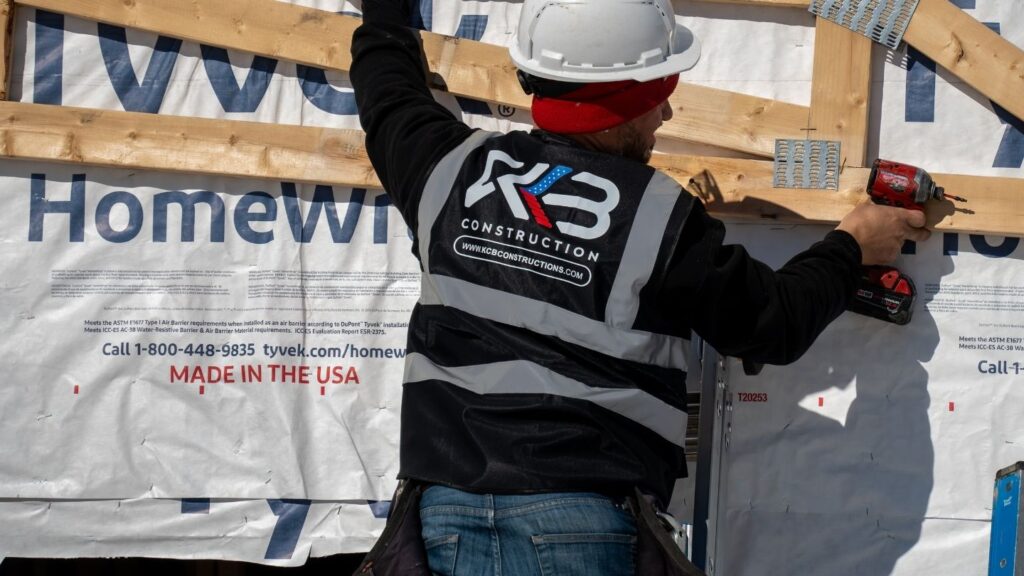
A water-resistive barrier, often called a WRB, helps manage moisture that gets behind exterior cladding.
It is not simply an optional layer that can be ignored during every siding project.
The DOE explains that properly integrated housewrap or another approved water-resistive material can form part of a drainage system behind the siding.
Additionally, seams, penetrations, windows, and doors require appropriate detailing.
For example, flashing should work with the drainage plane instead of directing water behind it.
Why Does Flashing Matter Around Windows and Doors?
Windows and doors interrupt the exterior wall assembly.
Therefore, these transitions require careful moisture-management details.
Flashing helps guide water toward the exterior instead of allowing it to move into vulnerable wall areas.
The Vinyl Siding Institute installation manual also directs installers to install flashing before siding and use a water-resistive barrier where required.
As a result, good Siding Installation involves much more than fastening exterior panels.
Can Damaged Siding Make Winter Problems Worse?
Damaged siding can increase the exposure of exterior wall components to weather.
However, the seriousness depends on the location, extent, material, and cause of the damage.
A small cosmetic defect may not have the same implications as missing siding or repeated moisture problems.
Homeowners should watch for signs such as:
- Cracked siding
- Loose panels
- Missing sections
- Visible gaps
- Warped areas
- Damaged trim
- Failed caulk where appropriate
- Staining
- Recurring moisture concerns
- Deteriorated exterior materials
These conditions should be evaluated before new materials simply cover them.
Should Damaged Materials Be Covered With New Siding?
Not automatically.
Installing new siding over deteriorated materials can leave underlying problems unresolved.
For example, the Vinyl Siding Institute advises replacing rotten boards rather than installing vinyl siding directly over rotting wood.
Therefore, a siding replacement project can also be an opportunity to investigate visible exterior damage.
Depending on the condition discovered, repairs may be necessary before Siding Installation proceeds.
What Can Staining Around Siding Mean?
Staining can have several causes.
It may be related to dirt, biological growth, drainage patterns, exterior runoff, damaged materials, or moisture.
Therefore, staining should not automatically be diagnosed as a siding failure.
Recurring moisture deserves a broader evaluation.
The source may involve:
- Roofing
- Gutters
- Windows
- Doors
- Flashing
- Wall penetrations
- Siding
- Exterior trim
- Other building components
A professional assessment can help determine whether the siding is part of the problem or simply where the symptoms appear.
Can New Siding Make a Home More Energy Efficient?
Potentially, but siding alone should not be expected to transform a home’s energy performance.
Replacing siding can create an opportunity to evaluate insulation, air sealing, sheathing, and other parts of the wall assembly.
However, ordinary siding and insulation serve different purposes.
Energy performance also depends on:
- Wall insulation
- Air sealing
- Windows
- Doors
- Attic insulation
- Basement conditions
- Wall construction
- Thermal bridging
- Installation quality
Therefore, claims that basic siding replacement alone will dramatically reduce heating bills should be treated carefully.
Can Insulation Be Added During a Siding Project?
In some projects, yes.
The Department of Energy notes that siding replacement can create an opportunity to add exterior rigid insulation to certain wall assemblies.
However, adding exterior insulation affects other details.
Windows, doors, flashing, wall thickness, fasteners, and drainage systems may need to be coordinated with the new assembly.
Therefore, this type of upgrade requires proper planning.
What Is Insulated Siding?
Insulated siding combines exterior siding with an attached insulating material.
For example, some insulated vinyl siding products incorporate rigid foam.
DOE building-science guidance recognizes insulated siding as one method of adding continuous insulation and reducing thermal bridging.
However, the performance depends on the specific product and installation.
Homeowners should review technical documentation rather than assuming every insulated siding product provides the same thermal value.
What Is the Difference Between Siding and Insulation?
Siding is exterior cladding.
Insulation is a material or system intended primarily to resist heat flow through parts of the building envelope.
They have different jobs.
The U.S. Department of Energy explains that insulation helps reduce heat movement between the inside and outside of a home.
Siding, meanwhile, forms part of the exterior weather-facing assembly.
Therefore, installing new siding does not automatically mean the home has received a complete insulation upgrade.
Can Siding and Insulation Work Together?
Yes.
A properly designed wall can combine exterior cladding with insulation, air-control layers, water management, and structural components.
In some projects, continuous exterior insulation may be added beneath new siding.
This can help address heat flow through framing when the system is properly designed and installed.
However, every property has different existing conditions.
Therefore, homeowners should avoid assuming that one wall upgrade is appropriate for every house.
Why Does Proper Siding Installation Matter?
Proper Siding Installation matters because even quality materials depend on correct installation details.
Different siding products have different fastening, clearance, cutting, flashing, and handling requirements.
Professional installation may involve careful attention to:
- Wall preparation
- Alignment
- Fastener placement
- Expansion and contraction
- Corners
- Openings
- Flashing
- Penetrations
- Drainage
- Trim
- Manufacturer requirements
Therefore, the visible siding is only part of the finished work.
Why Do Manufacturer Instructions Matter?
Different materials behave differently.
Vinyl, fiber cement, engineered wood, and traditional wood siding do not share identical installation requirements.
For example, fastening methods and movement allowances can vary.
Clearances around roofs, decks, soil, and other surfaces may also depend on the siding system.
Therefore, installers should follow the current technical instructions for the specific product.
A general siding rule should never replace manufacturer requirements.
Why Does Expansion and Contraction Matter?
Some siding products expand or contract as environmental conditions change.
Therefore, fastening and spacing requirements may be designed to allow appropriate movement.
Improper fastening can contribute to visible problems or reduced performance.
However, the correct installation method depends on the material.
This is another reason professional Siding Installation requires product knowledge rather than one universal technique.
What About Siding Around Pipes and Exterior Fixtures?
Exterior walls often contain penetrations.
These can include vents, pipes, electrical fixtures, hose connections, and HVAC components.
Each penetration interrupts the wall system.
Therefore, siding, flashing, sealing materials, and the drainage plane need to work together around these areas.
DOE guidance specifically emphasizes sealing and flashing exterior wall penetrations as part of water management.
What Role Does Siding Play in Moisture Management?
Siding provides the first exterior cladding layer, but effective moisture management continues behind it.
Water that passes the cladding should have a safe path to drain and dry.
The Department of Energy explains that typical exterior cladding systems may allow some water past joints and gaps.
Therefore, a wall should not rely solely on the visible siding to manage moisture.
A complete approach may involve:
- Exterior cladding
- Flashing
- Water-resistive barrier
- Drainage paths
- Proper transitions
- Sealed penetrations
- Appropriate wall design
The exact assembly depends on the building.
Can Moisture Get Behind New Siding?
Yes, which is why drainage details matter.
Even new siding is not a reason to ignore the wall system behind it.
Wind-driven rain can find openings in many exterior assemblies.
Therefore, properly integrated flashing and water-resistive barriers help manage water that reaches the area behind the cladding.
This approach supports drying and reduces the likelihood that trapped water remains inside vulnerable wall areas.
Does Every Moisture Problem Mean the Siding Failed?
No.
Water intrusion can originate from many areas.
For example, a roof-to-wall intersection, damaged flashing, window opening, penetration, or roof problem may allow moisture into the building.
Therefore, replacing siding without understanding the source may fail to solve the actual problem.
A thorough evaluation is especially important when staining, interior water marks, rot, or recurring exterior damage are present.
What Types of Siding Are Commonly Used on Homes?
Homeowners have several siding options.
Each material has different characteristics, maintenance needs, installation details, appearance, and cost considerations.
Common categories include:
- Vinyl siding
- Fiber cement siding
- Engineered wood siding
- Wood siding
- Other approved cladding systems
No single material is automatically the right choice for every home.
What Should Homeowners Consider When Comparing Siding?
Material selection should look beyond color alone.
Important considerations include:
- Appearance
- Maintenance
- Durability
- Installation requirements
- Wall conditions
- Weather exposure
- Manufacturer guidance
- Project budget
- Trim details
- Long-term maintenance goals
Additionally, some homes may have architectural details that influence which products are practical.
Is Vinyl Siding a Good Option?
Vinyl siding is widely used on residential properties and is available in many profiles and finishes.
However, successful performance still depends on preparation, fastening, flashing, movement allowances, and installation details.
The Vinyl Siding Institute provides specific installation guidance for wall preparation, flashing, water-resistive barriers, and fastening.
Therefore, homeowners should evaluate the system as well as the product.
What About Fiber Cement Siding?
Fiber cement is another residential cladding option.
It can provide a different appearance and maintenance profile from vinyl or wood.
However, installation requirements are product-specific.
Fasteners, clearances, flashing details, storage, cutting, and finishing may all require attention according to the manufacturer.
Therefore, choosing fiber cement should include a review of the specific product documentation and project conditions.
Is Wood Siding Still an Option?
Yes. Wood siding continues to be used for many homes, especially where homeowners want a traditional exterior appearance.
However, wood can require ongoing coating, maintenance, and moisture management.
Its condition should be evaluated carefully before repairs or replacement.
Exposed or deteriorated wood may require more than simply covering the surface.
What About Engineered Wood Siding?
Engineered wood siding offers another option for residential exteriors.
Products vary by manufacturer, profile, finish, and installation system.
Therefore, homeowners should compare maintenance expectations, installation instructions, appearance, warranty terms, and compatibility with the existing building.
Why Does Siding Matter for Homes in New England?
Homes in New England experience seasonal changes that place exterior assemblies under different conditions throughout the year.
Boston-area climate records confirm regular winter periods with freezing temperatures.
Therefore, exterior home maintenance should account for cold weather, moisture, wind, snow, and changing temperatures.
For homeowners in Woburn and Middlesex County, inspecting siding before winter can help identify visible problems while exterior work may still be easier to plan.
However, not every crack or faded panel means complete siding replacement is necessary.
The condition, extent of damage, wall assembly, and homeowner goals all influence the right approach.
KCB Construction approaches Siding Installation as part of a broader construction process that considers preparation, exterior conditions, workmanship, and related repairs.
Once these fundamentals are understood, the decision becomes more specific: whether damaged siding should be repaired or replaced, when installation should happen, which material fits the home, and how to plan the project before winter conditions narrow the exterior work window.
Should You Replace Damaged Siding Before Winter?
Replacing damaged siding before winter may be worth considering when deterioration is extensive, recurring, or exposing parts of the wall assembly.
However, not every cracked or damaged section requires a complete siding replacement.
Localized problems may sometimes be repaired when the surrounding material remains sound and compatible replacement pieces are available.
More extensive problems deserve closer evaluation.
Warning signs can include:
- Multiple loose panels
- Missing siding
- Widespread cracking
- Warped sections
- Repeated repair areas
- Deteriorated trim
- Visible gaps
- Recurring moisture stains
- Rot or damaged materials
The cause matters as much as the visible damage.
For example, repeatedly damaged siding around a window may point to a flashing or moisture-management concern rather than a simple cosmetic defect.
Therefore, repairs should address the underlying condition whenever possible.
Can Siding Be Installed During the Fall?
Yes. Siding Installation can be performed during the fall when weather, product requirements, site conditions, and safe installation practices allow the work to proceed.
There is no single calendar cutoff that applies to every siding system.
Contractors should consider:
- Available daylight
- Temperature
- Wind
- Rain
- Surface moisture
- Material handling
- Jobsite safety
- Manufacturer requirements
Different siding products may respond differently to environmental conditions.
Therefore, installation instructions for the specific product should guide handling, fastening, clearances, cutting, and other details.
For example, vinyl siding requires proper allowances for movement rather than rigid fastening.
The Vinyl Siding Institute provides detailed instructions for fastening and installation practices because correct movement is part of the system’s performance.
Why Does Fall Weather Require Flexible Scheduling?
Exterior construction is exposed directly to changing weather.
Rain, strong wind, or unsafe working conditions may require adjustments.
Additionally, daylight becomes more limited as fall progresses.
Therefore, a siding contractor may need to sequence different elevations or tasks around usable working conditions.
Project planning should allow for those changes instead of assuming every scheduled day will provide identical conditions.
Is September a Good Time for Siding Installation?
September can be a useful time to plan Siding Installation before colder winter conditions become more frequent.
However, the month alone does not determine whether a project should begin.
The siding material, project size, repairs, weather, product availability, and existing wall condition all influence timing.
Starting the planning process earlier may also provide greater flexibility when exterior work depends on weather.
For homeowners in Woburn, Middlesex County, and the Greater Boston Area, September is a practical time to inspect exterior siding and discuss needed work.
However, homeowners should avoid rushing installation simply to meet a seasonal deadline.
Proper preparation remains more important than choosing the earliest possible date.
What Should Be Inspected Before New Siding Is Installed?
Before new siding is installed, the existing exterior should be evaluated for visible problems.
Important areas may include:
- Existing siding
- Sheathing where accessible
- Visible moisture damage
- Rot
- Exterior trim
- Window transitions
- Door transitions
- Flashing
- Wall penetrations
- Water-resistive barrier
- Previous repairs
Not every condition will be visible before removal begins.
In some projects, hidden deterioration is discovered only after existing siding or trim has been removed.
That does not mean every wall needs to be rebuilt.
Instead, exposed conditions should be evaluated and addressed appropriately before the new cladding covers them.
Why Should Windows and Doors Receive Extra Attention?
Windows and doors interrupt the wall’s drainage system.
Therefore, these locations require careful flashing and water-management details.
U.S. Department of Energy building-science guidance explains that correctly integrated flashing directs water outward instead of allowing it into wall cavities.
For this reason, professional Siding Installation should consider window and door transitions as part of the exterior system.
Should You Repair Siding or Replace It?
The decision depends on the extent, cause, age, and condition of the siding.
A repair may make sense when damage is localized and the remaining system is in serviceable condition.
Replacement may deserve consideration when problems are widespread or repeatedly returning.
Homeowners should consider:
- How widespread is the damage?
- Are repairs becoming frequent?
- Is matching material available?
- Is moisture damage present?
- Are underlying materials affected?
- Are multiple elevations deteriorated?
- Does the exterior need broader updating?
Appearance can also influence the decision.
However, cosmetic concerns should be considered separately from technical problems such as rot or water intrusion.
A qualified siding contractor can help identify whether targeted repairs or broader replacement better fits the existing conditions.
What Are the Most Common Siding Installation Mistakes?
Even quality siding can perform poorly when installation details are incorrect.
Possible mistakes include:
- Improper fastening
- Incorrect clearances
- Poor flashing details
- Ignoring manufacturer instructions
- Covering damaged materials
- Poor window transitions
- Poor door transitions
- Mishandling penetrations
- Restricting required movement
- Weak moisture-management details
Requirements vary by siding type.
Therefore, a method suitable for one material may not be appropriate for another.
Why Is Improper Fastening a Problem?
Fasteners secure siding to the building while allowing the system to perform as designed.
Some siding materials require specific placement, spacing, fastener types, or movement allowances.
Therefore, installers should follow manufacturer instructions rather than relying on a universal fastening method.
This is particularly important with products that expand and contract.
Why Should You Never Ignore Flashing?
Flashing helps redirect water toward the exterior.
Poorly integrated flashing can allow moisture to enter vulnerable parts of the wall assembly.
DOE guidance recommends integrating flashing with the drainage plane around windows, doors, roof intersections, and wall penetrations.
Therefore, flashing should be considered a fundamental part of Siding Installation rather than a cosmetic detail.
Can New Siding Improve Curb Appeal Before Winter?
Yes. New siding can significantly update how a home looks from the street.
Homeowners can coordinate siding with trim, doors, roofing, and other exterior finishes.
Design choices may include:
- Color
- Profile
- Texture
- Trim style
- Accent areas
- Corner details
- Exterior finish combinations
However, appearance should not replace technical evaluation.
Beautiful new siding installed over damaged or poorly managed wall conditions can leave important problems unresolved.
Therefore, successful siding replacement combines aesthetics with preparation and sound installation practices.
How Do You Choose the Right Siding Material?
There is no single siding material that is best for every property.
The right choice depends on the home, homeowner priorities, budget, maintenance goals, and installation requirements.
Consider:
- Appearance
- Maintenance needs
- Durability
- Climate exposure
- Manufacturer requirements
- Compatibility with the home
- Budget
- Installation needs
- Trim options
- Long-term goals
For example, one homeowner may prioritize low maintenance.
Another may place greater value on a specific architectural appearance.
Therefore, siding selection should begin with project goals rather than simply choosing the most familiar product.
Why Is Professional Siding Installation Important?
Professional Siding Installation brings together preparation, materials, flashing, fastening, trim, sequencing, and moisture-management details.
The goal is not simply to make the exterior look new.
A complete installation should consider how the siding interacts with windows, doors, penetrations, flashing, water-resistive barriers, and other parts of the wall.
DOE building-science guidance emphasizes that siding works with a drainage plane behind the exterior cladding.
Therefore, workmanship behind the visible finish can be just as important as the siding itself.
KCB Construction provides Siding Installation and related construction services for homeowners in Woburn, Middlesex County, and the Greater Boston Area.
This allows exterior projects to be approached with attention to preparation, related repairs, finishing details, and overall project coordination.
How Far in Advance Should You Plan a Siding Project Before Winter?
Homeowners should begin planning before their preferred exterior construction window becomes narrow.
However, there is no universal contractor lead time.
Project timing depends on factors such as:
- Property size
- Siding material
- Existing damage
- Required repairs
- Material availability
- Weather
- Project scope
- Contractor scheduling
Additionally, hidden conditions can affect a project after existing siding is removed.
Therefore, planning should include reasonable flexibility rather than assuming the original schedule can never change.
Starting the conversation earlier also provides time to compare materials, review scope, discuss trim details, and understand preparation requirements.
What Should You Ask a Siding Contractor?
Good questions help homeowners understand what they are actually purchasing.
Before Siding Installation begins, consider asking:
- What siding system do you recommend?
- Why does it fit this home?
- What preparation is included?
- How will damaged areas be handled?
- How will flashing be addressed?
- How will windows be treated?
- How will doors be treated?
- What moisture-management details are included?
- What manufacturer instructions apply?
- What does the project scope include?
- How are weather delays handled?
- What cleanup is included?
Additionally, ask what is not included.
Clear exclusions can be just as important as the listed services.
For example, discovering rot after siding removal may create repair work outside the original visible scope.
Understanding how those conditions will be handled can prevent confusion during the project.
Does New Siding Really Protect Your Home During Winter?
Yes. Properly selected and installed siding can improve the exterior cladding system and help shield underlying wall components from direct weather exposure.
However, siding is only one component of the building envelope.
Siding alone does not correct:
- Missing insulation
- Structural damage
- Active roof leaks
- Foundation problems
- Major water intrusion
- Poor air sealing
- Every energy-efficiency issue
A home should be viewed as a complete building system.
For example, replacing siding cannot repair a roof leak that directs water into the wall from above.
Likewise, new siding does not automatically improve insulation throughout the house.
However, siding replacement can create an opportunity to inspect, repair, or improve parts of the exterior wall that become accessible during the project.
That is why thoughtful Siding Installation involves evaluating more than the visible finish.
Frequently Asked Questions About Siding Before Winter
Can New Siding Help Protect a Home From Winter Weather?
Yes. New siding can improve the home’s exterior cladding and reduce direct exposure of underlying wall components to wind, snow, rain, and other weather.
However, flashing, drainage, insulation, wall condition, and installation also affect performance.
Is September a Good Time to Replace Siding?
September can be a practical time for siding replacement when weather, materials, jobsite conditions, and contractor scheduling support the project.
Earlier planning may also provide more flexibility before colder weather.
Can Siding Be Installed During Cold Weather?
In some conditions, yes.
However, acceptable installation conditions depend on the siding material, manufacturer instructions, handling requirements, weather, and worker safety.
There is no universal temperature limit for every siding system.
Does Siding Make a House Warmer?
Siding and insulation serve different purposes.
Siding is exterior cladding, while insulation primarily resists heat flow.
Some siding projects may include exterior insulation, but ordinary siding replacement alone should not be presented as a guaranteed energy upgrade.
How Do I Know if My Siding Needs to Be Replaced?
Look for widespread cracking, missing sections, loose materials, recurring repairs, deterioration, moisture concerns, or damage to underlying components.
However, professional evaluation can help determine whether repair or replacement is appropriate.
Can Damaged Siding Cause Moisture Problems?
Damaged siding can increase weather exposure and may contribute to moisture concerns.
However, water can also enter through roofing, windows, flashing, doors, penetrations, or other parts of the building envelope.
The source should be identified before assuming siding is solely responsible.
Is Professional Siding Installation Worth Considering Before Winter?
Yes, especially when a project involves extensive replacement, wall repairs, difficult transitions, flashing, multiple elevations, or moisture-management concerns.
Professional Siding Installation can help coordinate these details within one exterior project.
Can New Siding Be a Smart Investment Before Winter?
New siding can be a practical investment when existing materials are damaged, deteriorated, outdated, or no longer meeting the homeowner’s exterior goals.
It can also improve curb appeal and renew the visible exterior of the property.
More importantly, proper Siding Installation supports the home’s exterior cladding system when preparation, flashing, drainage, fastening, and manufacturer requirements are handled correctly.
However, new siding cannot compensate for every problem elsewhere in the home.
Its performance depends on existing wall conditions, moisture management, installation quality, insulation strategy, maintenance, and the complete building envelope.
Therefore, homeowners preparing for winter should focus on the condition of the entire exterior system rather than viewing siding as a stand-alone solution.
👉 Contact KCB Construction Today to discuss Siding Installation before winter. KCB Construction serves Woburn and the Greater Boston Area with thoughtful planning, quality workmanship, and professional project execution focused on your home’s exterior needs.